Club Car 48 Volt Charger Manual: A Comprehensive Guide
This manual provides detailed instructions for operating and maintaining Club Car 48-volt chargers, including the ERIC, CGR-630, and PowerDrive 3 models.
It ensures safe and efficient battery charging, referencing UL and CSA certifications.
Club Car utilizes sophisticated 48-volt charging systems designed to maximize battery life and ensure optimal performance of your golf car. These systems cater to various battery types, primarily lead-acid, and increasingly, newer technologies. Understanding the core principles of these systems is crucial for proper maintenance and troubleshooting. The charging process isn’t simply about replenishing power; it involves carefully controlled stages to prevent overcharging, sulfation, and other issues that can diminish battery capacity.
Modern Club Car charging systems, like the ERIC (Exportable Run/Idle/Charge) system, incorporate smart technology for efficient and safe operation; These chargers automatically adjust charging parameters based on battery condition and temperature. Proper charging is vital for maintaining the warranty and extending the lifespan of your Club Car’s power source. This guide will delve into the specifics of each system, providing detailed instructions and safety precautions.
Understanding the ERIC Charging System
The ERIC (Exportable Run/Idle/Charge) charging system represents a significant advancement in Club Car’s battery charging technology. Designed for Precedent Excel golf cars, ERIC offers intelligent charging profiles and enhanced data communication capabilities. A key feature is its integrated USB port, intended exclusively for use by authorized Club Car technicians. This port facilitates data transfer for reconfiguration, software updates, and diagnostic procedures, ensuring the charger remains optimized for peak performance.
ERIC chargers are “smart” chargers, meaning they monitor battery voltage, current, and temperature to adjust the charging process accordingly. This prevents overcharging and extends battery life. The system automatically transitions between charge modes, optimizing for efficiency and longevity. Maintaining the USB port cover when not in use is crucial to prevent damage or unauthorized access. ERIC’s sophisticated design contributes to a reliable and efficient charging experience.
CGR-630 Lead Acid 48V 15A Charger Overview
The CGR-630 is a robust and economical 48V, 15A smart charger specifically designed for lead-acid batteries. This charger operates on a universal input voltage, accepting both 100-240V AC power, making it adaptable for various electrical systems. Before initial use, thoroughly read all provided instructions to ensure safe and effective operation. The CGR-630 utilizes advanced charging algorithms to optimize battery health and lifespan, preventing overcharging and maximizing efficiency.
This model is designed for ease of use and reliability. Its smart charging capabilities automatically adjust to the battery’s needs, providing a tailored charging cycle. The CGR-630’s construction emphasizes high quality, offering a durable and dependable charging solution. Proper usage, as outlined in the operator’s manual (Revision A, dated 11/14/2023), is essential for maintaining optimal performance and avoiding potential issues. Thank you for choosing this product!
PowerDrive 3 Battery Charger: Key Features
The PowerDrive 3 battery charger is a sophisticated system designed for optimal performance and longevity of your Club Car’s battery pack. Access to the complete maintenance and service manual is crucial for understanding its full capabilities; contact your Club Car representative if you require this publication (Manual Number 103372929). This charger offers advanced charging profiles tailored to lead-acid batteries, ensuring efficient and safe operation.
Key features include automatic voltage detection, which allows the charger to adapt to different battery types and voltages. It also incorporates overcharge protection, preventing damage to the battery. The PowerDrive 3 is engineered for reliability and ease of use, contributing to reduced maintenance needs. Regular consultation of the service manual will help you diagnose and resolve any potential issues, maximizing the charger’s lifespan and maintaining peak battery performance. Proper maintenance is key to a long-lasting system.
Safety Precautions for Club Car Chargers
Prior to operating any Club Car 48-volt charger, carefully read and understand all instructions within this manual. Always disconnect the charger from the AC power source before connecting or disconnecting it from the battery. Avoid charging in poorly ventilated areas, as batteries release explosive gases during charging. Wear appropriate eye protection to prevent contact with corrosive materials that may be present in the battery.
Never attempt to modify or repair the charger yourself; contact a qualified technician for any service needs. Ensure the charger is placed on a stable, non-conductive surface during operation. Inspect the AC cord and DC cord set for damage before each use, and replace if necessary. Keep the USB port (on ERIC chargers) covered when not in use to prevent accidental damage or interference. Following these precautions will minimize the risk of injury and ensure safe, reliable charging performance. Always prioritize safety!
General Charger Operation Instructions
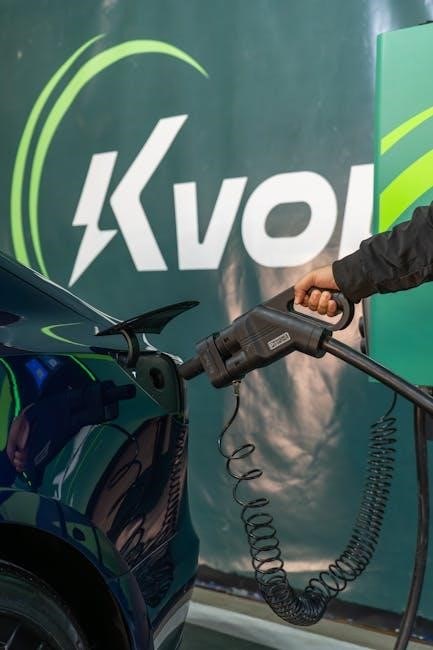
To begin the charging process, ensure the golf car is stationary and the key switch is in the OFF position. Connect the DC cord set to the battery terminals, observing proper polarity (red to positive, black to negative). Then, plug the AC cord into a grounded 100-240V outlet – the CGR-630 is a SMART charger accommodating this range. The charger will automatically initiate its charging cycle, indicated by LED lights.
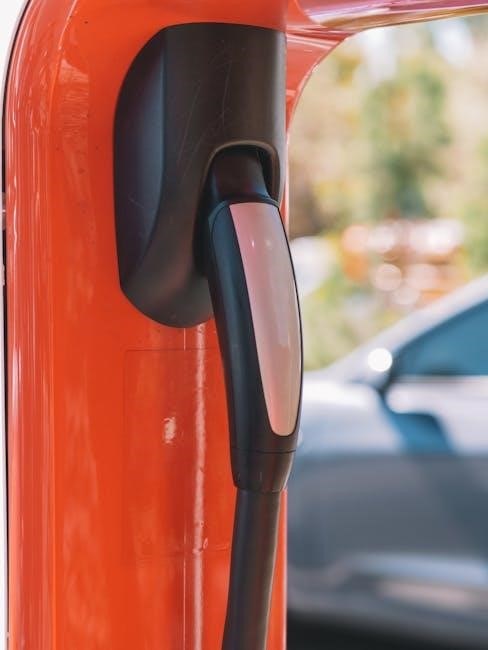
During charging, do not operate the golf car. Allow the charger to complete its full cycle, even if the battery appears to be fully charged. Once complete, disconnect the AC cord first, followed by the DC cord set. Refer to the specific manual (PowerDrive 3, ERIC, or CGR-630) for detailed instructions related to your model. Regular adherence to these steps will maximize battery life and charger performance. Remember to consult the maintenance and service manual if needed.
Pre-Charge Procedures for Dead Batteries
When encountering a completely discharged or “dead” battery, a pre-charge procedure is crucial before initiating a standard charge. This is particularly important for lead-acid batteries. The Lester Charger 48-Volt system incorporates a dead battery pre-charge function, designed to gently introduce a small current to overcome the initial resistance of a deeply discharged battery.
To activate this, connect the charger as usual, and it will automatically detect the low voltage and begin the pre-charge phase. Do not interrupt this process. The pre-charge duration varies depending on the battery’s discharge level. Attempting to charge a deeply discharged battery with a standard charge can damage both the battery and the charger. Always consult your charger’s specific manual (CGR-630 or PowerDrive 3) for detailed instructions and recommended pre-charge times. Patience during this phase is key to successful battery recovery.
Connecting the Charger to the Battery
Before connecting the charger, ensure the golf car is switched off and the parking brake is engaged. Locate the battery pack, typically under the seat or in the rear of the vehicle; The D.C. cord set features color-coded connectors – red for positive (+) and black for negative (-).
Carefully connect the red connector to the positive terminal of the battery pack and the black connector to the negative terminal. Ensure a secure connection to prevent sparking or damage. Once the D.C. cord is connected, plug the A.C. cord into a properly grounded 15-amp circuit. The charger will initiate its charging cycle automatically. Never attempt to modify the D.C. cord set or A.C. plug. Incorrect connections can lead to charger malfunction or battery damage. Always double-check polarity before powering on.
Charging System Components Identification
The Club Car charging system comprises several key components. The transformer (identified with numbers 1-7 in wiring diagrams) steps down the AC voltage. The D.C. cord set, featuring red and black connectors, delivers power to the battery. A 15-amp A.C. circuit provides the necessary electrical supply.
Specifically, the ERIC charger includes a USB port for technician use – data transfer, reconfiguration, and updates – and should be covered when not in use. The CGR-630 is a SMART charger designed for lead-acid batteries. The PowerDrive 3 requires referencing its specific maintenance and service manual for detailed component locations. Understanding these parts, and their interconnections, is crucial for proper maintenance and troubleshooting. Refer to detailed wiring diagrams for precise identification and function of each component within your specific charger model.
Transformer and Wiring Diagram Explanation
The transformer within the Club Car charger is a critical component, reducing high-voltage AC power to a usable level for charging the 48-volt battery system. Wiring diagrams, often displaying numbered components (like 1 through 7), illustrate the electrical pathways. These diagrams are essential for understanding how the charger functions and for troubleshooting potential issues.
Specifically, the diagrams detail connections for the D.C. cord set (red, black, and blue wires) and the 15-amp A.C. circuit. They show how the transformer interacts with these elements to deliver power. Proper interpretation of these diagrams requires understanding basic electrical principles. Lester chargers also utilize similar diagrams for component identification. Always consult the specific manual for your charger model, as wiring configurations can vary. Incorrect wiring can damage the charger or the battery system, so caution is advised.
D.C. Cord Set and A.C. Circuit Details
The D.C. cord set, featuring red, black, and blue wires, is the direct connection point to the vehicle’s battery pack. Correct polarity is crucial; improper connection can cause severe damage. The red wire typically represents the positive terminal, black the negative, and blue often serves as a sensing wire for the battery management system. Always verify connections before initiating a charge cycle.
Regarding the A.C. circuit, the Club Car chargers are designed to operate on standard 100-240V AC power. A 15-amp circuit is generally required for optimal performance. Ensure the outlet is properly grounded and protected by a circuit breaker. The CGR-630 model, for instance, is a SMART charger capable of automatically adjusting to input voltage variations. Inspect the A.C. cord for any signs of damage before each use, and never operate a charger with a frayed or damaged cord.

USB Port Functionality (ERIC Chargers)
The ERIC charging system incorporates a USB port, strategically positioned for exclusive use by Club Car authorized technicians. This port isn’t intended for general consumer access or charging personal devices. Its primary function revolves around facilitating crucial data transfer, enabling technicians to access and analyze battery performance metrics.
Furthermore, the USB port allows for reconfiguration of the charger’s settings and the seamless implementation of software updates. These updates ensure the charger operates with the latest algorithms for optimal battery charging and longevity. It is vital to keep the USB port cover securely in place whenever the port isn’t actively utilized by a qualified technician. This prevents accidental damage and unauthorized access, maintaining the integrity of the charging system. Tampering with the USB port may void the warranty.
Troubleshooting Common Charging Issues
If your Club Car charger isn’t functioning correctly, begin by verifying the AC power source and ensuring the D.C. cord is securely connected to the battery terminals. A common issue is a tripped circuit breaker; reset it if necessary. Inspect the D.C. cord for any signs of damage, such as frayed wires or broken connectors, and replace it if found.
LED indicator lights provide valuable clues; refer to the “LED Indicator Lights and Their Meanings” section for interpretation. If the charger displays an error code, consult the “Error Codes and Solutions” section for specific guidance. For dead batteries, utilize the pre-charge procedure outlined in this manual. If problems persist, avoid attempting repairs yourself; contact a Club Car authorized service technician. Improper repairs can be dangerous and void the warranty. Always disconnect the charger before inspecting or cleaning.
LED Indicator Lights and Their Meanings
The LED indicators on your Club Car charger provide crucial information about the charging process and system status. A solid green light typically signifies a fully charged battery and the charger is in standby mode. A flashing green light indicates the charger is actively charging the battery. Red lights usually signal a fault or error condition, requiring further investigation.
A flashing red light may indicate a reversed polarity connection, a faulty battery, or a problem with the charger itself. Refer to the “Error Codes and Solutions” section for specific interpretations of flashing red light patterns. A solid red light could mean the battery is deeply discharged and requires a pre-charge cycle. Always consult the manual for your specific charger model (ERIC, CGR-630, or PowerDrive 3) as LED meanings can vary. Ignoring these signals can lead to battery damage or charger malfunction.
Error Codes and Solutions
Club Car chargers utilize LED flash patterns to communicate error codes, indicating specific issues. A rapidly flashing red light often signifies reversed polarity – immediately disconnect the charger and verify correct battery connections (red to positive, black to negative). A slow, repeating flash could indicate a faulty battery cell or a complete battery failure, requiring professional testing or replacement.
If the charger fails to initiate, check the AC power supply and ensure the D.C. cord set is securely connected. For ERIC chargers, a USB connection error might trigger a code; consult Club Car support for reconfiguration. CGR-630 chargers may display codes related to over-temperature protection. Always refer to your charger’s specific manual (PowerDrive 3, ERIC, or CGR-630) for a complete list of error codes and their corresponding solutions. Ignoring error codes can lead to further damage and void the warranty.
Battery Maintenance for Optimal Charging
Maintaining proper battery health is crucial for efficient charging and extended battery life. Regularly inspect battery terminals for corrosion; clean with a baking soda solution and apply a corrosion protectant. Ensure batteries are adequately watered with distilled water only, avoiding overfilling. Equalization charging, performed periodically, helps balance cell voltages and prevent sulfation – consult your battery manufacturer’s recommendations.
Avoid deep discharging whenever possible, as it shortens battery lifespan; After each use, promptly recharge the batteries. For lead-acid batteries (like those used with the CGR-630 charger), ensure proper ventilation during charging to dissipate potentially explosive hydrogen gas. Regularly check the specific gravity of each cell to identify weak or failing batteries. Following these maintenance steps will maximize charging efficiency and minimize the need for premature battery replacement, saving both time and money.
Charger Specifications (Voltage, Amperage)

Club Car 48-volt chargers are designed to operate within specific voltage and amperage ranges to ensure safe and effective charging. The CGR-630 Lead Acid 48V 15A charger, for example, accepts a 100-240V AC input and delivers a constant 15-amp charge to lead-acid batteries. ERIC charging systems dynamically adjust amperage based on battery needs, but operate on a nominal 48-volt DC output.
PowerDrive 3 chargers also provide a 48-volt DC output, with amperage varying depending on the model and charging stage. Always verify the input voltage compatibility with your local power supply before connecting the charger. Using an incorrect voltage can damage the charger or batteries. Refer to the specific charger’s manual (103372929 for PowerDrive 3) for precise specifications, including output current limits and recommended battery types. Adhering to these specifications is vital for optimal performance and safety.
UL and CSA Certification Information

Club Car 48-volt chargers undergo rigorous testing and certification processes to ensure they meet stringent safety standards. Specifically, the Precedent Excel models equipped with the ERIC charging system have been listed by Underwriters Laboratories (UL), a globally recognized safety certification organization.
Furthermore, these chargers also meet the criteria established by the Canadian Standards Association (CSA), demonstrating compliance with Canadian safety regulations. These certifications signify that the chargers have been evaluated for potential hazards, including electrical shock, fire, and mechanical risks. UL and CSA listing provides assurance to owners and operators that the chargers are designed, manufactured, and tested to prioritize safety. Always look for the UL and CSA marks on the charger housing as verification of this important safety compliance. Maintaining this certification requires ongoing adherence to quality control standards.
Finding the Correct Manual for Your Charger
Locating the appropriate manual for your Club Car 48-volt charger is crucial for safe and effective operation. Different charger models – such as the ERIC, CGR-630, and PowerDrive 3 – require specific documentation. Begin by identifying the model number printed directly on the charger housing; this is your key identifier.
Once you have the model number, you can access manuals through several avenues. First, check the Club Car website; they often host digital copies of owner’s manuals and service guides. Alternatively, contact your local Club Car representative; they can provide the correct manual or direct you to where you can obtain it. If you have a Precedent Excel with the ERIC system, the owner’s manual will detail USB port functionality. Remember, using the wrong manual could lead to improper charging procedures or safety hazards. Always prioritize using the manual specifically designed for your charger model.
Contacting Club Car Support for Assistance
Should you encounter issues not addressed in your Club Car 48-volt charger manual, or require further clarification, contacting Club Car support is recommended. Direct assistance can resolve complex problems and ensure safe operation of your charging system. For immediate support, visit the official Club Car website; they typically offer a comprehensive FAQ section and contact forms for specific inquiries.
Alternatively, you can reach out to your local authorized Club Car dealer. These dealers possess specialized knowledge and can provide hands-on assistance, including troubleshooting and repair services. When contacting support, be prepared to provide your charger’s model number and a detailed description of the issue. For PowerDrive 3 chargers, referencing the manual number 103372929 may expedite the process. Don’t hesitate to request a maintenance and service manual if you intend to perform any repairs yourself, ensuring you have the correct documentation for your specific model.
Maintenance and Service Manual Access
Accessing the appropriate maintenance and service manual is crucial for performing in-depth repairs or comprehensive servicing of your Club Car 48-volt charger. These manuals contain detailed schematics, troubleshooting guides, and parts lists essential for qualified technicians and experienced users. For the PowerDrive 3 battery charger, the manual is identified by number 103372929; obtaining this specific document is vital for accurate service procedures.
If you do not currently possess the necessary manual for your charger model, contacting your local Club Car representative is the recommended course of action. They can provide the correct publication, ensuring you have the precise information needed for safe and effective maintenance. Alternatively, the Club Car website may offer digital downloads or options to purchase physical copies of service manuals. Remember, attempting repairs without the proper documentation can lead to further damage or safety hazards, so prioritize obtaining the correct manual before commencing any work.
Charger Cleaning and Storage Guidelines
Maintaining the cleanliness of your Club Car 48-volt charger is essential for optimal performance and longevity. Regularly inspect the charger’s exterior for dust, dirt, and debris, and wipe it down with a clean, dry cloth. Avoid using water or solvents, as these can damage internal components. Pay particular attention to the ventilation openings, ensuring they are unobstructed to prevent overheating.
When storing the charger for extended periods, disconnect it from both the battery and the AC power source. Store the charger in a clean, dry, and well-ventilated location, protected from extreme temperatures and humidity. Avoid storing the charger in direct sunlight or near flammable materials. Inspect the AC cord and DC cord set for any signs of damage before storage, and replace them if necessary. Proper storage will help ensure your charger remains in good working condition and is ready for use when needed, extending its lifespan and reliability.